
From Membrillo to Goiabada: How Fruit Paste Got Around the World
Every culture has its way of preserving fruit — boiling, sweetening, drying, fermenting. Among these techniques, one stands out for its elegance and endurance: fruit paste. Dense and packed with flavor, fruit paste has made a sweet journey around the globe.
What is Fruit Paste?
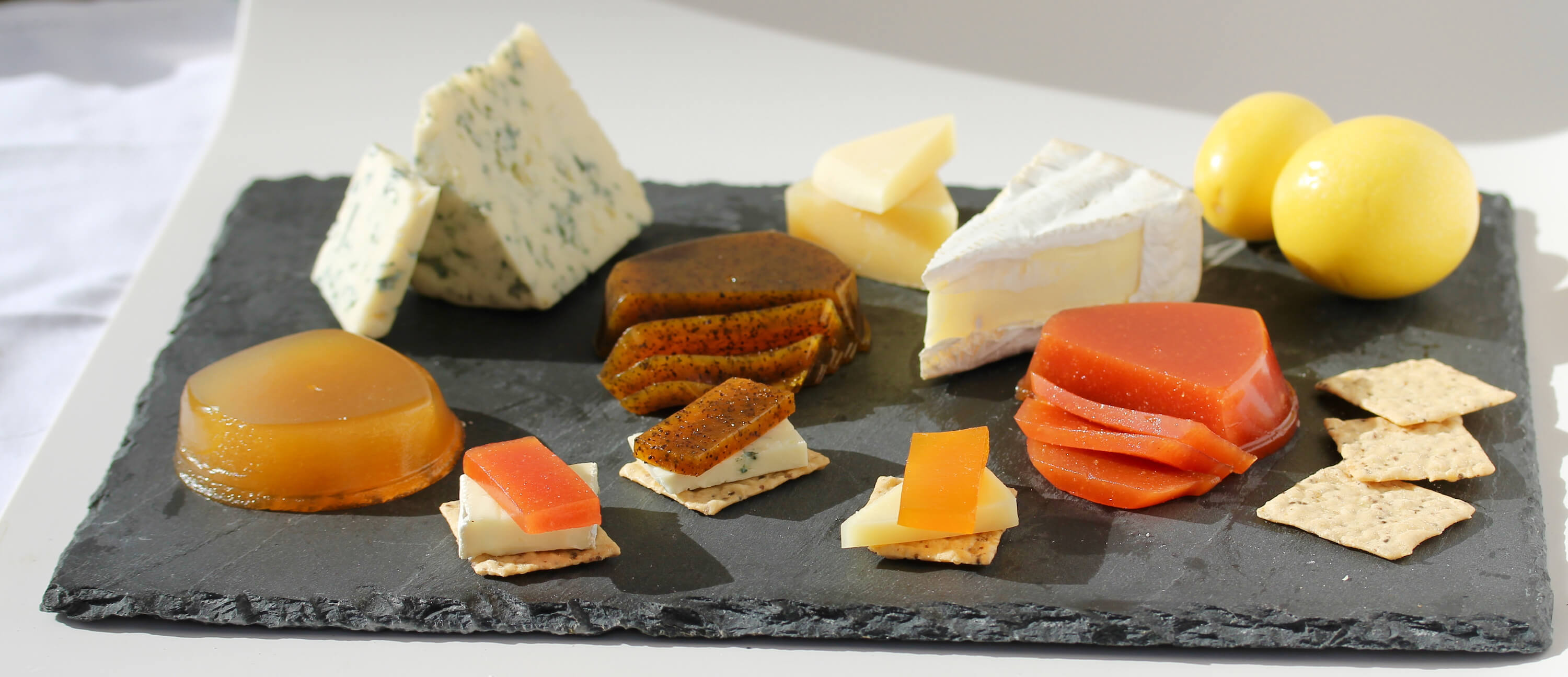
From Spain’s tradition of membrillo to our small-batch tropical fruit pastes from Hawaii, fruit paste has existed in many times and places around the world. It is a thick, sliceable confection made by slowly cooking fruit with a sweetener (and added pectin if the fruit does not contain a significant amount) until it sets into a glossy block of firm jelly. Unlike jams and jellies, it doesn't spread very well; we recommend slicing it with a knife and serving with crackers and cheese.
Quince Origins — the Mediterranean

Quince paste, more commonly known as quince cheese, is a thick and sticky jelly originally from the Mediterranean. It is in fact not a cheese, but a firm paste made from quince — a sour, larger-than-a-pear, but pear-shaped fruit. Quince is so hard and sour that it is unpleasant or even impossible to eat raw. To make quince palatable, Apicius (the only surviving cookbook from classical antiquity) says to stew them in honey. Since quince is naturally high in pectin, the happy result is quince paste.
This method of preparing quince became popular throughout the Mediterranean. It has different names because its makers speak different languages. It is known as dulce de membrillo in Spain, marmelada in Portugal, cotognata in Italy, pâte de coing in France, and birsalmasajt in Hungary, just to name a few.
An Aside on Marmalade — the UK
Have you ever had marmalade on toast? The word marmalade traces directly back to quince paste. When Portuguese marmelada reached England in the 16th century, it referred specifically to quince cheese (marmelo means “quince” in Portuguese). English cooks began experimenting with other fruits, especially citrus, producing “marmalades” of lemon, lime, and Seville orange.
Over time marmalade came to mean the bitter-sweet orange preserve with peel that we know today. Despite the texture being quite different, its name hasn't deviated much from "quince paste"!
From Quince to Guava — Latin America and the Caribbean

Quince paste was introduced to the Americas by Spanish and Portuguese colonists. But it is guava, not quince, that grows abundantly in tropical regions. Guava has a high pectin content, so it was only natural to substitute it for quince.
The result is guava paste, or goiabada in Brazil, bocadillo in Colombia, conserva de guayaba in Venezuela, pasta de guayaba in Mexico, and even more. Despite the difference in names, each version follows the same principle: guava is cooked down with sugar, poured into a mold, and left to set. The finished paste is firm enough to slice and is often paired with mild cheeses — like Brazil’s Romeu e Julieta, the beloved duo of goiabada and creamy Minas cheese.
And Hawthorn As Well — China

On the other side of the globe in northern China, hawthorn has long been prized for its digestive benefits. Just like quince, hawthorn is astringent and not very palatable on its own. It is used in sweet snacks such as guǒdānpí (hawthorn fruit leather), tánghúlu (candied hawthorn on skewers), and shānzhāpiàn (haw flakes), a popular childhood candy. Closest to quince paste is shānzhāgāo (hawthorn cake). Surprisingly, the resemblance isn't just texture. Hawthorn is high in pectin, and the process of making shānzhāgāo is basically the same as making quince or guava paste.
Fruit Paste in the Tropics — Hawaii and Beyond

The same spirit that turned quince into paste centuries ago lives on in Hawaii, where we craft tropical fruit pastes from mango, lilikoi passion fruit, guava, pineapple, and more. Like the traditional quince and guava pastes, ours are slowly cooked, full of fruit, and designed to be sliced, paired, and savored.
Through experimentation and a love for local fruit, we’ve learned how to work with both pectin-rich and pectin-light fruits. Discover our collection of Hawaiian fruit pastes — an evolution of the Mediterranean quince tradition, reimagined through the vibrant flavors of the Pacific.